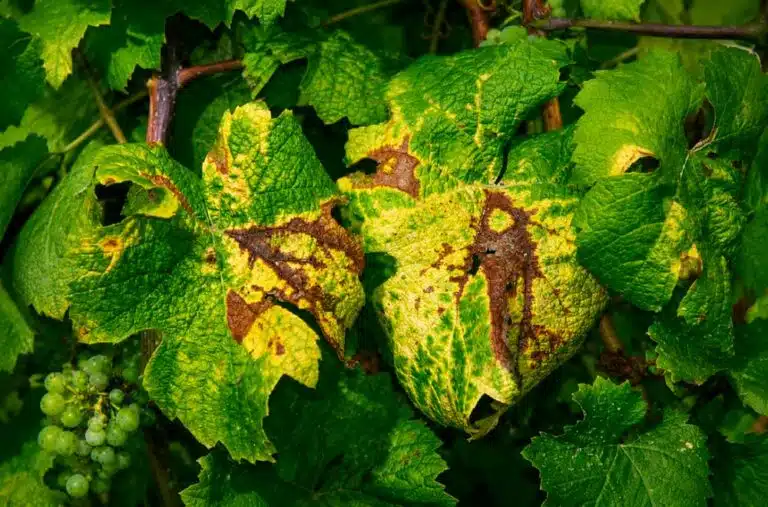
The Champagne vineyards, renowned worldwide for the quality of their sparkling wines, are now facing a growing threat: Flavescence Dorée. This vine disease, particularly feared by French winegrowers, is now spreading into Champagne and raising concerns among producers and wine industry organisations alike.
In recent months, searches related to terms such as Flavescence Dorée Champagne, Champagne vine disease, mandatory vineyard treatment Champagne and Flavescence Dorée insecticide treatment have increased significantly. Consumers, wine professionals and residents of wine-growing regions are all looking to better understand this disease, its consequences and the measures being taken to protect the vineyards.
In this article, we take a closer look at this emerging threat to the Champagne vineyards and the challenges it represents for quality producers such as Champagne Delaunois Chanez, located in Rilly-la-Montagne, a Premier Cru village.
What Is Flavescence Dorée?
Flavescence Dorée is a serious vine disease caused by a phytoplasma, a bacteria-like organism that attacks the circulation of sap within the vine.
It is mainly spread by an insect known as the grapevine leafhopper (Scaphoideus titanus). By feeding on vine leaves, this insect transmits the disease from one vine to another, allowing it to spread rapidly through vineyards.
This disease is considered particularly dangerous because:
- it is highly contagious,
- it severely weakens vines,
- and it can eventually lead to the death of infected plants.
What Are the Symptoms of Flavescence Dorée?
Symptoms generally appear during the summer and may vary depending on the grape variety. The most common signs include:
- yellowing or reddening of leaves,
- curling foliage,
- drying grapes,
- poor grape ripening,
- significant yield reduction,
- gradual decline of the vine.
For Champagne growers, this disease represents both an economic and heritage risk.
A Disease Now Present in Champagne
For many years, Flavescence Dorée was mainly confined to southern France. However, it is now progressing northwards. In recent growing seasons, outbreaks have been detected in Champagne, prompting authorities to strengthen controls.
As highlighted in a recent France 3 Régions article, certain vineyard plots in Champagne have even been subjected to mandatory insecticide treatments in order to limit the spread of the leafhopper.
These exceptional sanitary measures illustrate the seriousness of the situation.
The regional newspaper L’Union also recently reported the continued spread of the epidemic through Champagne vineyards, underlining the growing concern among wine professionals.
Why Are Winegrowers So Concerned?
Champagne is built upon an extremely valuable wine-growing heritage. Vineyard plots, often passed down through generations, require years of care before reaching their full qualitative potential.
A disease such as Flavescence Dorée can lead to:
- mandatory removal of infected vines,
- lower yields,
- significant monitoring costs,
- additional treatments,
- ecological imbalance within the vineyards.
For Premier Cru producers such as Champagne Delaunois Chanez, preserving vineyard health is an absolute priority in order to maintain grape quality and protect the terroirs of Rilly-la-Montagne.
Mandatory Treatments: A Controversial Measure
To limit the spread of the disease, health authorities may impose mandatory insecticide treatments targeting the leafhopper.
This situation raises several debates concerning:
- vineyard protection,
- environmental impact,
- phytosanitary treatment management,
- balancing disease control with sustainable viticulture.
Today, many winegrowers are working towards:
- enhanced vineyard monitoring,
- preventive cultivation methods,
- more targeted treatments,
- improved biodiversity management.
Champagne is particularly sensitive to these issues, as the environmental and quality image of the region has become increasingly important to consumers.
Vineyard Monitoring in Champagne
In response to this threat, winegrowers are increasing vineyard inspections:
- leaf observation,
- symptom detection,
- leafhopper trapping,
- mapping of risk areas.
This vigilance has now become part of everyday vineyard management.
In Rilly-la-Montagne, a Premier Cru village in the Montagne de Reims, producers remain especially attentive to preserving their vineyards in order to maintain exceptional quality standards.
Grape Quality Remains a Priority
Despite these new sanitary concerns, Champagne producers continue to work with high standards to preserve grape quality.
Champagne Delaunois Chanez, based in Rilly-la-Montagne, remains committed to:
- rigorous vineyard management,
- careful grape selection,
- and a constant search for balance and finesse in its cuvées.
The Premier Cru terroirs of the Montagne de Reims are renowned for producing grapes with:
- excellent ripeness,
- freshness,
- aromatic potential,
- and perfect balance for crafting fine Champagnes.
Order Premier Cru Champagne Directly Online
At a time when consumers are increasingly seeking transparency and direct relationships with producers, direct sales are becoming more popular.
The official website of Champagne Delaunois Chanez allows customers to:
- discover the full range of cuvées,
- order Premier Cru Champagne online,
- benefit from secure delivery,
- buy directly from the producer.
Accueil
Available cuvées include:
- Brut Champagnes,
- Rosé Champagne,
- gastronomic cuvées,
- vintage Champagnes,
- characterful wines from the terroir of Rilly-la-Montagne.
A Champagne Industry Fully Mobilised
Faced with Flavescence Dorée, the entire Champagne industry is mobilised:
- winegrowers,
- cooperatives,
- winegrowers’ unions,
- the Comité Champagne,
- health authorities.
The objective is clear:
- sustainably protect the vineyards,
- limit the spread of the disease,
- preserve the identity of Champagne terroirs,
- maintain the exceptional quality of Champagne wines.
This collective mobilisation demonstrates just how deeply the Champagne region is attached to its heritage and future.
Conclusion
Flavescence Dorée now represents a genuine challenge for Champagne. This vine disease, spread by the grapevine leafhopper, is forcing winegrowers to strengthen vineyard monitoring and adapt certain viticultural practices.
Despite this threat, Champagne producers continue to passionately defend their terroirs and expertise. In Rilly-la-Montagne, Champagne Delaunois Chanez continues its work with precision and dedication in order to craft elegant and authentic Premier Cru Champagnes.
To discover the estate’s Champagnes and order directly online:
https://champagne-delaunois-chanez.fr